
| [strategies] | [events] | [summit] | [exhibition] | [forum] | [about] | [contact] |
MEDIA NWATCH
How to contribute to Media Watch
MEDIA WATCH is an investigative performance analysing how the media finds, uses and presents information.
Correspondents and Task Forces act as agents in investigating media coverage and presentation. Contributions will be fed into a central archive of material, that will include newspaper articles, television or radio news, photographs of bill boards, online articles etc. The purpose of MW is to question how the media presents information and in particular how the media makes ‘news’.
With the recent events in London, Media Watch is taking place at a critical moment. Here in London it has been fascinating watching the medias response. What has been interesting is the volume and variation in source material now available (ie through mobile phones, domestic video cameras), and the opening out of ‘reporting’ to potentially be anyone with access to the correct technology. This raises important questions around accuracy, impartiality and the ‘who’ of the making of news becomes altogether much more important. As the Guardian on the 11th July says ‘ a new era in the Citizen Reporter’.You can contribute to Media Watch through casting a critical eye on what you see, hear and read. This could be in terms of the style, the presentation, the language or the content. It could be directly related to recent events in London or it could be in relation to other issues relevant to you in your locale. Media Watch is about critical analyses of media presentation and dissemination. It can be content related and/or concern the use of images or language.
Examples of how you can contribute include:
collecting newspaper/magazine/print based articles
taping news on television or radio
writing a blog
sending an emailtaking photographs
contributing to the online forum
Or for the creatively inspired, some examples:
make a video
do a performance
write a text
Any contribution makes you a correspondent for the project and your work will appear online and in the exhibition which will go on tour after Australia throughout the UK and Europe.
In the wider concerns of KISSS, there are four other strategies into which work can be fed and contributed. We welcome new work or work already made that fits within the concerns of the project. kisss@elastic.org.uk
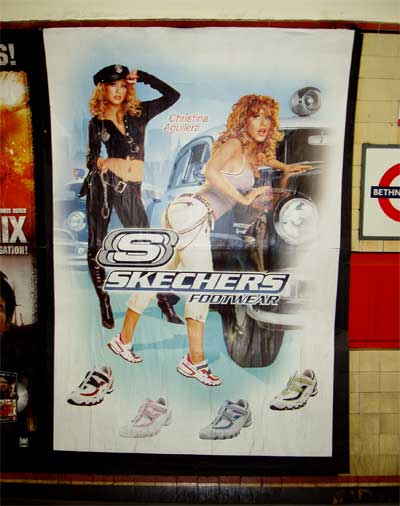
What does this billboard mean? Post your comments on the forum!
Check out other findings of the Billboard Task Force.